
The material decides how a costume looks under party lights, how it feels after three hours of trick-or-treating and whether it survives the wash. Polyester holds shape and shine, cotton breathes, knits stretch and foam builds structure. Pick by the job the costume has to do, and read the label before you read the character name. At Hero Cos Shop we build our range around recognizable film and pop culture characters, so this guide shows you how to judge the materials behind them.
TL;DR
- Fabric type matters, but so does construction: weave, knit and finish change drape, stretch and care as much as the fiber name does.
- Polyester suits shiny, shaped and superhero looks; cotton and soft knits suit kids who need comfort; knits suit tight-fitting suits.
- For long wear, check breathability, seams, closures and layers before you worry about the details.
- Follow the care label. Stretch fabrics, sequins and mesh all lose out with harsh washing.
- Foam and other rigid materials belong to armor, wings and props, and they add weight, so think about how long you will wear them.
Table of Contents
- The main costume fiber families
- Woven, knit or nonwoven: construction matters as much as the fiber
- Matching material to the look
- Comfort: the test that decides how long it gets worn
- When foam and rigid materials come in
- Care: keeping a costume good for next year
- How to read a costume listing
- Find your costume
- FAQ
- Sources
The main costume fiber families
Every costume fabric starts as a fiber, and fibers fall into three groups. The Sewing & Craft Alliance explains that natural fibers such as wool, cotton, linen and silk give warmth and comfort but may shrink, wrinkle and fade, while synthetics are generally more wrinkle and shrink resistant and easier to care for. Blends combine the two sets of traits.
For costumes, this means:
- Cotton: soft, breathable and easy on skin. It rarely stretches on its own and wrinkles easily, so it suits base layers, simple outfits and children's costumes.
- Polyester: strong and wrinkle resistant. The University of Georgia Extension describes it as resistant to abrasion, weather, moths and mildew, which is why so many shiny, bright and structured costumes use it. It breathes less than natural fibers, so it can feel warm indoors.
- Nylon: strong, elastic and abrasion resistant, but it absorbs little moisture and, per the same University of Georgia page, can melt under excessive heat. Keep irons and hair dryers away from it.
- Wool and wool-like fabrics: warm and good for period looks, but heavy for a crowded party.
- Modacrylic: a synthetic used in some fur-style and pile fabrics. It is warm and flame resistant but extremely heat sensitive, so never press it hot.
- Metallic yarns: the glitter in sparkly costumes. They dislike abrasion and flexing, so wash them gently, following the label.
Woven, knit or nonwoven: construction matters as much as the fiber
Two costumes can both say "polyester" and feel completely different. Colorado State University's textile guidance points out that properties such as drape, elasticity, shrinkage and strength depend on how the fabric is spun, woven, treated and finished, not only on fiber. So judge the whole material, not just its name.
The three constructions you will meet:
| Construction | What it does | Typical costume use |
|---|---|---|
| Woven | Stable and holds its shape; edges can fray | Capes, jackets, vests, structured pieces |
| Knit | Stretches and recovers; does not ravel, though it can run or curl | Bodysuits, leggings, tops, kids' costumes |
| Nonwoven (felt, imitation suede) | Does not ravel or curl; suits simple lines | Appliqués, hats, simple tunics, accessories |
The descriptions of wovens, knits and nonwovens come from the Sewing & Craft Alliance's fabric guidelines. The practical point for buyers: a woven cape holds a dramatic line, a knit suit moves with the body, and felt gives clean shapes without frayed edges.
Matching material to the look
Characters come with a visual signature, and the material is what delivers it. The National Sewing Circle's costume guide pairs effects with fabrics, and its list is a useful decoder when you look at a costume listing:
- Royal or regal: shiny rayon, acetate or velveteen.
- Flowing and graceful: rayon or certain chiffons.
- Fairy or elf: transparent fabrics and lace.
- Worn warrior: canvas, denim or matte faux leather.
- Superhero: knits that conform to the body, since stretch handles tight-fitting bodysuits and leggings.
- Furry or creature: faux fur, minky or fleece.
The Sewing & Craft Alliance adds a simple rule about silhouette: soft fabrics suit flowing sleeves and skirts, while crisp or firm fabrics hold shapes that need body. When a costume photo shows a stiff collar or a sharp shoulder, expect a firmer material; when it shows a swirling cloak, expect something softer.
Superhero and villain bodysuits
Tight-fitting characters depend on stretch for both the look and the comfort. A knit bodysuit lets a child run, sit and climb stairs without the seams fighting back. Our kids Deadpool jumpsuit is a tight-fitting superhero bodysuit for exactly this kind of character look, and our Deadpool costume guide walks through the fit and the pieces.
Capes, cloaks and period looks
Vampires, wizards and royals live or die by the cape. Light-to-medium weight fabrics with good drape move better than stiff ones, and shiny finishes read as more theatrical in photos. For period costumes, heavier weaves add authenticity, but they also add warmth, so think about the room you will be in.

Sparkle, sequins and shine
Sequined and metallic fabrics look great under party lights and in photos. They are also the most sensitive to rough handling: metallic yarns dislike abrasion, so wear them over a soft layer and avoid sitting on rough surfaces.
Comfort: the test that decides how long it gets worn
A costume that looks perfect but itches ends up in a bag by 7 p.m. South Dakota State University's consumer guidance advises that outer garments should be comfortable rather than tight or baggy and remain practical when the wearer walks, sits, bends or reaches. That is a good test to run on any costume, in the fitting room or at home.
Before Halloween night, check these:
- Breathability. Synthetics hold heat. For a long evening or a warm party, a breathable base layer helps.
- Seams and tags. Rough seams and scratchy labels are the usual culprits for children.
- Closures. Zippers, hook-and-loop fasteners and elastic should not press on skin.
- Length. Hems and capes that drag are a tripping hazard, especially in the dark.
- Movement. Have the wearer sit, bend, reach and climb steps in the costume.
Kids with sensitive skin
The Kisha Project's sensory-friendly Halloween guidance recommends starting with soft, familiar fabrics like cotton shirts, pajamas, sweatshirts and leggings and checking tags, seams, elastic and closures against the skin. It also suggests trying the costume on at home before the night and keeping familiar backup clothing on hand instead of asking a child to put up with obvious discomfort. For these kids, the cozy base layer under the costume matters as much as the costume fabric.
For more ideas on picking outfits kids actually want to wear, see our kids Halloween costume ideas.

Cold nights and layers
Halloween in much of the US means chilly evenings. Wool and fleece-type fabrics are warm, and a thin thermal layer under a lighter costume gives warmth without bulk. We cover this in warm Halloween costumes that still look the part.
Hot rooms and long convention days
Heavy, layered or furry costumes build up heat quickly. Anthrocon's guidance for people in full costume recommends breathable, sweat-wicking garments underneath, plus regular cooling and hydration breaks in hot conditions. The same logic applies to a crowded party or a convention hall: thick synthetic layers and masks warrant breaks and water.
When foam and rigid materials come in
Some characters need structure that fabric cannot give: armor, wings, tails, claws, helmets. A professional theater-design source notes that EVA foam is inexpensive, joins with hot glue and can be painted for armor, while Worbla becomes flexible when heated and is used for cosplay and specialty costume props. These are the materials behind many convention-ready looks.
What a buyer should know:
- Foam pieces keep their shape but do not breathe, and they add weight at the shoulders and head.
- Large wings or armor need comfortable harnesses and a way to sit down or get through a doorway.
- Lightweight wins. Wichita State University's design project for a child's mobility-device costume aimed to make the final costume lightweight and easy to assemble, disassemble and store, a useful standard for any bulky costume.
If you are deciding between a ready-made look and building something yourself, our cosplay vs. costume comparison lays out the options.
Care: keeping a costume good for next year
The care label is the final word, and University of Georgia Extension stresses following permanent care-label instructions. Beyond that:
- Stretch fabrics: Second Stage Dance, a performing arts organization, warns that elastane-containing fabrics can lose stretch and color with improper care. Wash gently and skip high heat.
- Embellished pieces: sequins, appliqués and metallic trim can be damaged by water or harsh cleaners. Spot clean where the label allows.
- Mesh, lace and nylon accessories: these need extra gentleness. A mesh laundry bag helps.
- Wool and natural fibers: may shrink, so keep them away from hot water and dryers unless the label says otherwise.
- Heat-sensitive synthetics: nylon and modacrylic can melt or warp under a hot iron. Steam from a distance or a low setting is safer.
Store costumes clean and dry, folded loosely, with hats and foam pieces supported so they keep their shape.
How to read a costume listing
A product page tells you more than the photo does. Look for:
- Fiber content: polyester, cotton, blends. Matching it to the use (a long party, a cold night, a young child) is the whole game.
- Construction words: knit, woven, satin, velvet, felt, mesh.
- What is included: bodysuit, cape, mask, gloves, props. Check which pieces are fabric and which are rigid.
- Size information: a child's costume should allow room for a layer underneath.
- Reviews: customer comments about fit, itchiness and warmth tell you what a spec sheet cannot.
For fast character ideas where one prop does the heavy lifting, see our movie character costume ideas.
Our view: authenticity lives in the details
We believe a costume is only convincing when the material matches the character. A hero's bodysuit should look and move like a bodysuit, a villain's cloak should hang with some drama and a holiday outfit should feel festive without being a chore to wear. That is why Hero Cos Shop focuses on thematic authenticity and attention to detail for popular film and pop culture characters, for both kids and adults.
The best costume is the one a person is happy to keep wearing past the first photo. We look at how a character is supposed to look, then at what the wearer needs: room to move, comfort for a whole evening and a finish that suits the character. Browsing a wide range of styles lets you choose on both counts.
Our customers' reviews matter to us because they tell us how costumes feel in real use, not only how they look in pictures. A one-stop range of Halloween and Christmas costumes for children and adults makes it easier to compare and choose.
zz
Find your costume
If you are ready to pick, start with the kids Halloween costumes for characters and tight-fitting superhero suits, or browse the full Halloween costume collection for adults, horror characters and clowns. Holiday gatherings are covered in our Christmas costumes collection, and our Christmas costume ideas help with families and parties.
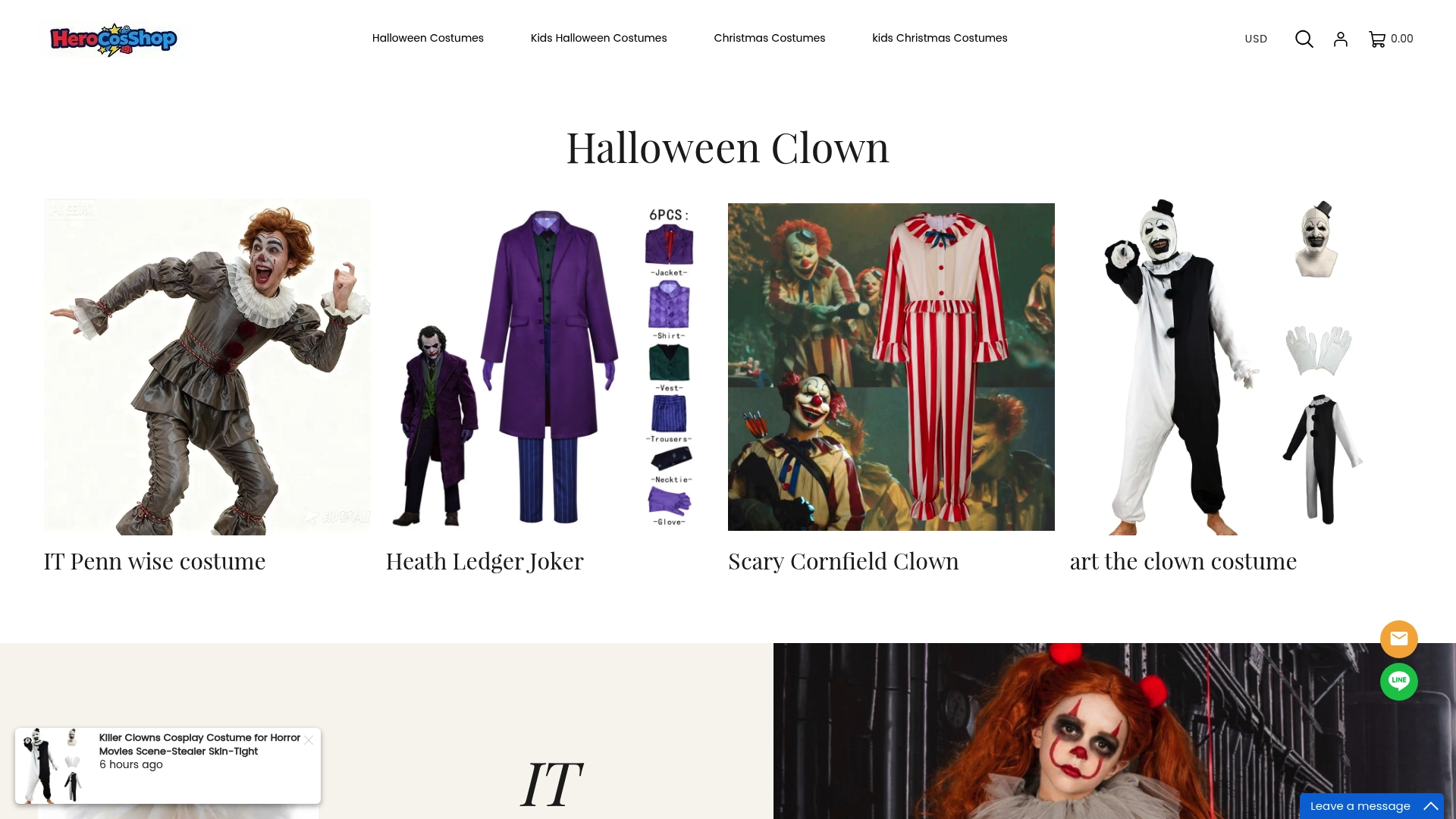
Browse by character, check the fabrics and sizes on each product page, and choose the look that fits your night.
FAQ
What is the best fabric for a kid's Halloween costume?
Soft, breathable fabrics such as cotton and stretchy knits are the comfortable choice for children. Knits give room to move and make dressing easier, and a cotton layer underneath adds comfort. Check tags, seams and closures against the skin, and try the costume on at home first.
Is polyester a good costume fabric?
Yes, for many looks. Polyester is strong, wrinkle resistant and holds color and shine, which is why it suits bright, shaped and superhero costumes. It breathes less than cotton, so for a warm room, wear a light breathable layer underneath.
What fabric makes a costume look shiny or royal?
Shiny rayon, acetate and velveteen are the classic choices for regal looks, and polyester satin gives a dramatic drape for capes. Metallic or sequined fabrics add sparkle but need gentle washing, following the care label.
How should I wash a costume?
Always follow the care label. Stretch fabrics can lose stretch and color with improper care, embellishments can be damaged by water or harsh cleaners, and nylon and modacrylic should stay away from high heat. When in doubt, spot clean and air dry.
What materials are used for armor and wings?
Rigid pieces are usually made from EVA foam, heat-formed plastics like Worbla, and supports such as harnesses and wire. They hold shape well but add weight and trap heat, so plan for breaks and easy movement.
Sources
- The Right Fabric, Sewing & Craft Alliance
- Textile Types, Colorado State University
- Understand Your Fibers, University of Georgia Extension
- Fabrics for Costumes and Cosplay, National Sewing Circle
- Keys to Buymanship, South Dakota State University
- Sensory-Friendly Halloween Costumes for Autistic Kids, The Kisha Project
- Theatre Design & Technology, Winter 2018
- From Prototype to Princess, Wichita State University
- The Right Way to Clean Costumes, Second Stage Dance