
Cosplay is the practice of dressing up and acting as a specific fictional character, which Merriam-Webster describes as dressing up as a character from a work of fiction, while a costume is simply an outfit worn for an event, a disguise, or a themed celebration. The two overlap often, especially around Halloween. At HeroCosShop, we find that intent and performance usually decide which label fits.
TL;DR:
- A Halloween outfit can still count as cosplay when you portray a specific character, match recognizable details, and perform for a fandom audience.
- For photos or a first convention, a store bought outfit or purchased base with handmade upgrades is enough; contests usually reward commissioned or handmade detail.
- Ask before photographing cosplayers, respect refusals, avoid touching them, and check event rules for dress codes and prop size limits.
- Before packing delicate pieces, follow care labels, let everything dry fully, and store wigs away from heat and armor supported to prevent warping.
Table of Contents
- What do the dictionaries say about cosplay and costume?
- How do purpose, accuracy, performance, and community differ?
- What do you call it when the two overlap?
- How can you take part: buy, commission, or craft?
- What are the community norms around consent, crossplay, and safety?
- How do cosplay and costume materials and construction differ?
- How should you care for and store cosplay outfits compared to costumes?
- How do cosplay and costumes shape identity and social interaction?
- Where do cosplay and costumes come from?
- How do we approach cosplay-style and event costumes?
- Where can you find ready-made costumes right now?
- FAQ
- Sources
What do the dictionaries say about cosplay and costume?
Start with the vocabulary. Merriam-Webster defines "costume" as an outfit worn to create the appearance characteristic of a particular period, person, place, or thing. The same dictionary defines "cosplay" as the activity or practice of dressing up as a character from a work of fiction. Notice the difference in what each word describes. A costume is an object you wear. Cosplay is something you do.
The practice is older than the word, though. The term "cosplay" was coined in Japan in 1983 by Nobuyuki Takahashi as a blend of "costume" and "play," while fans were already wearing costumes at fandom events decades earlier.
Short examples make this concrete. A person dressed as a ghost from a bedsheet for a neighborhood Halloween party is wearing a costume. A person who builds a detailed outfit of an anime hero, studies how that hero stands and speaks, and wears it to a convention is cosplaying. Same fabric, different purpose.
How do purpose, accuracy, performance, and community differ?
People use several signals, often without realizing it, to tell the two apart:
- Purpose: Cosplay centers on fandom and character portrayal. Costumes are usually tied to a holiday, party, or one-off event.
- Accuracy: Cosplayers often chase screen-accurate details, from props to makeup. Costumes range from a quick mask and cape to an elaborate rental piece.
- Performance: Many cosplayers adopt a character's mannerisms and pose or act in character. Costume wearers rarely do.
- Community: Cosplay connects to conventions, contests, and online fandom groups. Costumes show up at parties, school events, and trick-or-treating.
Reporting from the Smithsonian Center for Folklife and Cultural Heritage stresses embodiment and community as the heart of cosplay, rather than any single way of making an outfit. That matters because it means effort and expectations differ, but neither practice is "better." A parent assembling a last-minute pirate look for a school party and a competitor entering a craftsmanship contest are doing different things for different reasons.
What do you call it when the two overlap?
Real life is messy. A group of friends might coordinate as characters from one series for a Halloween party. Someone might dress as a favorite character just for photos. A photographer might stage a cosplay shoot far from any convention. Smithsonian reporting on the cosplay community covers this range of settings and styles.
Wikipedia's overview of cosplay notes that Halloween dressing up differs from cosplay mainly in purpose and context: Halloween outfits serve a holiday celebration, while cosplay emphasizes portraying a specific fictional character. When you are unsure, run this quick check:
- Audience: Are you dressing for a holiday crowd or a fandom crowd?
- Venue: Is it a party, street, or school event, or a convention or photoshoot?
- Accuracy: Are you matching a specific character's details closely?
- Performance: Will you act or pose as the character?
Then pick your phrasing. "This is cosplay because I am portraying a specific character and matching the source closely." Or: "This is a Halloween costume because I am dressing for the holiday and the look is more about fun than accuracy."
How can you take part: buy, commission, or craft?
You have several routes, and Smithsonian reporting notes that modern cosplay accepts ready-made, purchased outfits as valid participation.
- Buy ready-made: The fastest and often most budget-friendly route. It suits first-time convention visitors and anyone dressing for photos or a party.
- Commission a custom piece: A maker builds it to your specs. Accuracy is highest, but so is the cost and the wait.
- Craft it yourself: You get full creative control, and you pay in hours and practice.
For social media photos, buying is plenty. For a first convention, buy or mix a purchased base with small handmade upgrades. For contests, commissioning or crafting usually gives you the detail judges look for. If you want ideas to start from, our guide to closet-ready anime cosplay ideas on a budget and our list of last-minute TV character costume ideas both work with things you may already own. Our costume accessories checklist helps you pack the right pieces first.
Test the fit early, check that wigs and props are safe to wear and carry in a crowd, and plan basic wig and prop care ahead of time. A partner guide on cosplay wig care covers the prep in more detail.
Pro Tip: Wear the full outfit at home before the event. You will find the itchy seam, the loose strap, and the wig that tilts long before anyone sees it.

What are the community norms around consent, crossplay, and safety?
Cosplay communities are widely described as inclusive. Crossplay and gender-bending are common and accepted approaches, so anyone can portray any character they love.
The community mantra "cosplay is not consent" applies to photography and interaction too. Ask before taking someone's photo, respect a no, and keep your hands to yourself. The Smithsonian's reporting on the cosplay community discusses these expectations as part of how people feel safe participating.
Events also set their own rules, such as family-friendly dress limits or restrictions on prop size. Check the event's policies or contact the organizers before you go.
How do cosplay and costume materials and construction differ?
A basic costume is typically built for speed and price. Think printed fabric, simple seams, elastic closures, and plastic or foam accessories that look right from a few feet away. That is perfectly reasonable for trick-or-treating or an evening party.
Cosplay construction often goes further because the goal is a recognizable, accurate character. Builders commonly work with craft foam, thermoplastics, sewing patterns, wig styling, body paint or makeup, and prop-making materials. Merriam-Webster's entry on cosplaying notes that cosplay involves creativity with materials and construction as well as performance, and that while some people spend large sums on custom outfits, many use time and household items to transform into a character.

The difference is not that one uses "real" materials and the other does not. It is the level of attention. A costume might skip fine details like weathered armor or a precisely shaped wig. A cosplay may spend hours on exactly those. If you buy a ready-made outfit, you can still add finishing touches: a re-styled wig, painted accessories, or better boots. Small upgrades like these move a simple costume toward the cosplay end of the spectrum without a full custom build.
How should you care for and store cosplay outfits compared to costumes?
Costumes meant for one night need little more than a wash or spot clean and a spot in a closet or bin. Cosplay outfits tend to include delicate parts, so they reward more care.
For both, read the care label first and spot clean before you reach for the washing machine. For cosplay, add these habits:
- Wigs: Brush gently from the tips upward, store them on a form or in a bag, and keep them away from heat unless the fiber is heat safe.
- Props and armor: Keep foam and thermoplastic pieces flat or supported so they do not warp, and away from hot cars and direct sun.
- Fabric pieces: Hang structured jackets and capes, and fold soft items with tissue to avoid creases.
- Small parts: Keep fasteners, straps, and accessories in a labeled pouch so you can rebuild the look quickly.
Dust and moisture are the usual enemies of both. Let every piece dry fully before packing it away. A short checklist taped to the storage bin helps you remember what goes where, and it makes the next event much less stressful.
How do cosplay and costumes shape identity and social interaction?
Costumes can be playful and temporary. They let you try a funny or spooky persona for an evening, which is a pleasant way to connect with friends and neighbors.
Cosplay often goes deeper. The Smithsonian's reporting, titled around how escaping reality can help define identity, describes cosplay as a space for expression and empowerment. People step into a character they admire and use that character to express parts of themselves they may not show every day. That can build confidence and make it easier to start conversations, because a shared favorite character gives strangers something to talk about right away.
The community itself matters as much as the outfit. A research document hosted by Iowa State University describes the cosplay community as emphasizing accessibility and inclusivity, with participation ranging from buying a ready-made outfit to crafting from scratch, and connection to the character and community at the core of the hobby.
None of this means a simple costume is meaningless. A child's superhero cape can feel just as powerful in the moment. The difference is mostly one of depth and ongoing involvement.
Where do cosplay and costumes come from?
Dressing up is ancient. Masks, festival dress, theater, and holiday disguise all predate any modern fan hobby. Costume traditions like Halloween grew from seasonal celebrations, and the outfits tend to reflect the mood of the holiday: spooky, silly, or festive.
Cosplay has a more recent, fandom-based story. Fans wore costumes at science fiction events as far back as the 1939 WorldCon, long before anyone used the word "cosplay." The term arrived from Japan in 1983, when Nobuyuki Takahashi combined "costume" and "play." Since then, the hobby has spread worldwide through anime, comics, games, and film, supported by conventions and online communities.
Understanding both backgrounds explains why the labels differ. Costumes grew out of holiday and performance traditions. Cosplay grew out of fan communities that wanted to embody the characters they loved. When the two meet at a Halloween party or a convention, you are seeing two long traditions share the same room.
How do we approach cosplay-style and event costumes?
We specialize in themed Halloween and holiday costumes, and we put our attention on authenticity and detail so that an outfit feels like the character it is meant to be. If you want a ready-made option that balances recognizable character looks with convenience, our collections are built for that. We do not claim a ready-made outfit replaces a custom build for contest-level work, but for parties, photos, and first conventions, it is a practical place to start. Browse our cosplay costume categories, then use our accessories checklist and budget ideas above to finish the look.
— zz
Where can you find ready-made costumes right now?
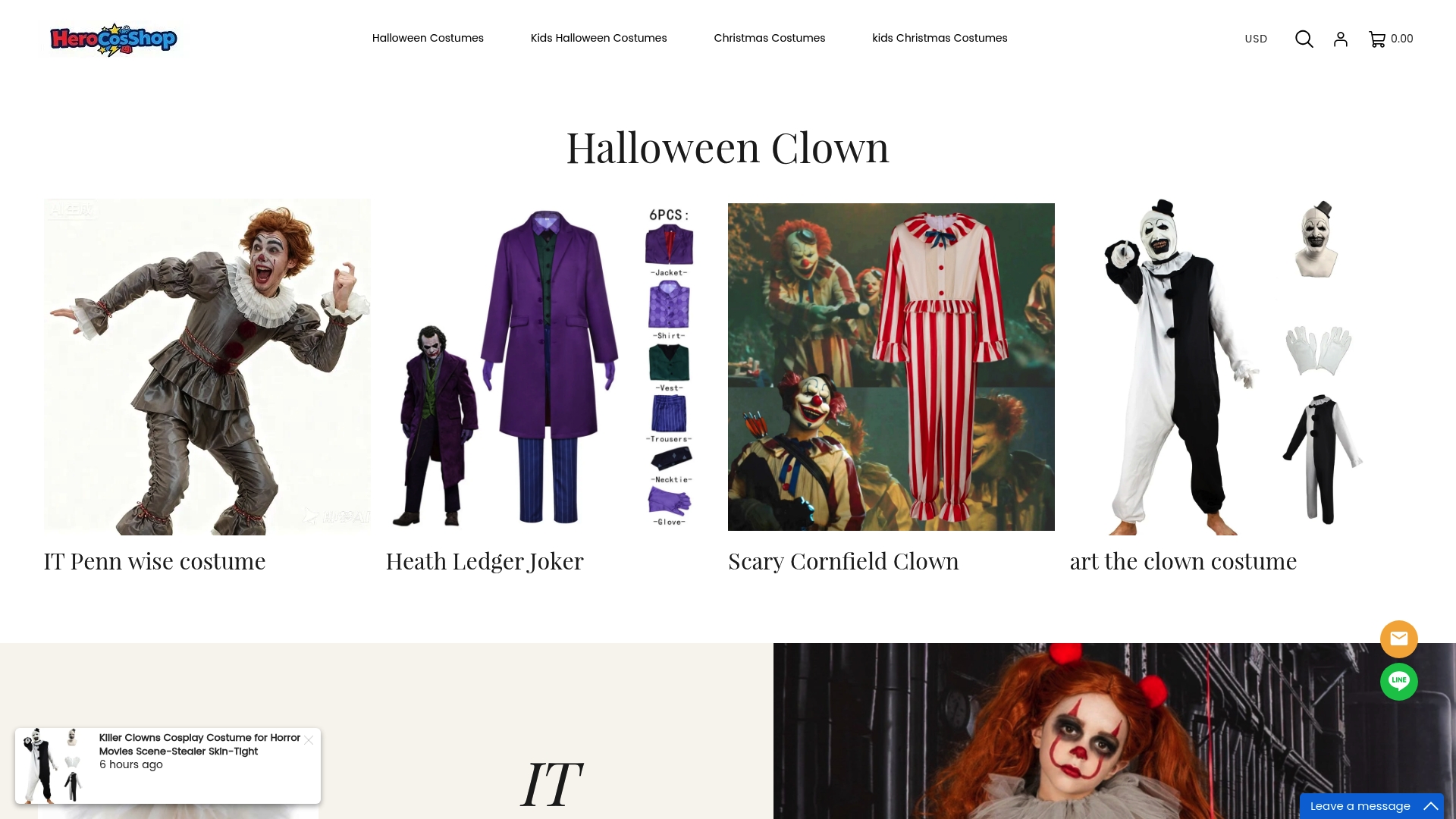
If you have decided that ready-made is your route, we make it easy to browse by occasion and age. Check our accessory checklist before you order.
- Halloween costumes for adults and kids, from classic looks to character-driven outfits
- Kids Halloween costumes for trick-or-treating and school parties
- Our collections to browse Halloween and Christmas styles
FAQ
Does dressing up for Halloween count as cosplay?
Not automatically. Halloween dressing up is usually a holiday costume, while cosplay means portraying a specific fictional character, often with attention to accuracy and performance. If you dress as one character, match the details, and act the part, many people would call it cosplay even on Halloween.
Can a guy cosplay a girl?
Yes. Crossplay, where someone portrays a character of a different gender, is common and accepted in the cosplay community. What matters is your love of the character and respect for others.
What is the difference between cosplay and anime?
Anime is a style of animation, while cosplay is the practice of dressing up as a character. Many cosplayers choose anime characters, but cosplay also covers video games, comics, films, and TV shows.
What is the meaning of cosplay costume?
A cosplay costume is an outfit made or bought to portray a specific fictional character. Merriam-Webster defines cosplay as dressing up as a character from a work of fiction, so the costume is the visible part of that practice.
Sources
- Merriam-webster
- Soken
- When Escaping Reality Helps Define Identity: Expression and Empowerment in the Cosplay Community | Smithsonian Center for Folklife and Cultural Heritage