
To measure for a costume, use a soft cloth tape, measure on bare skin or thin layers, keep the tape level and snug but not tight, and write every number down as you go. Take your height, chest or bust, waist and hips. For most costumes, add inseam, neck and head. Then match your numbers to the size chart on the product page, not to the size you wear in everyday clothes.
This guide covers adults, kids and teens, plus what to do when you land between two sizes and how to keep a costume fitting after you wash it.
TL;DR
- Use a flexible cloth tape, not a metal one, and measure on bare skin or thin layers, with the tape level all the way around.
- Measure bust or chest at the fullest point, waist at the narrowest point and hips at the fullest point. Write each number down right away.
- For kids, measure over the layers the costume will go over, such as a T-shirt and sweater, then size up rather than down.
- Compare your numbers to the chart for the specific costume, and allow extra room for padding, armor pieces or layers underneath.
- Order a child's costume four to six weeks before the event, so there is time to exchange if the fit is off.
Table of Contents
- What you need before you start
- Measuring an adult for a costume
- Measuring a child for a costume
- How to read a costume size chart
- Extra measurements for cosplay and detailed costumes
- Perspective: why fit makes the character
- Find your costume
- Keep the fit after you wash it
- Common measuring mistakes
- FAQ
- Sources
What you need before you start
You need three things: a soft tape measure, a pen and paper (or a notes app), and ideally a second person.
A cloth or flexible tape matters because a rigid metal tape does not follow the body's curves. Both Vendetta Couture's measuring guide and Casting Collective's measurement guide tell you to use a cloth tape. If you do not own one, a sewing tape costs very little at a fabric store. In a pinch, use a length of string and measure it against a ruler afterward.
A helper makes the numbers more reliable. It is hard to keep a tape level around your own waist while you twist to read it. If you are alone, stand in front of a mirror so you can check that the tape sits flat at the back.
A few ground rules apply to every measurement:
- Skin or thin layers. Bulky clothing adds inches that the costume does not need to accommodate. Casting Collective advises measuring on skin rather than over clothes.
- Level tape. The tape should run parallel to the floor around the body. A tape that dips at the back will give you a number that is too large.
- Snug, not tight. The tape should touch the body without pressing into it. A finger slipped under the tape is a good check.
- Stand naturally. Relax your shoulders, breathe normally and do not pull in your stomach.
- Write it down immediately. Vendetta Couture recommends recording each number as you take it, so you are not relying on memory.
Measuring an adult for a costume
Start with height, then work down the body. Here is the order that keeps things simple.
Height
Stand barefoot with your back against a wall, feet together and head level. Have a helper mark the wall at the top of your head with a pencil, then measure from the floor to the mark. Height decides whether a jumpsuit, robe or long coat will hit the right spot.
Chest or bust
Wrap the tape around the fullest part of the chest, under the arms and across the shoulder blades. Vendetta Couture notes that bust is measured around the fullest part and is not the same as bra size. Keep the tape level across the back.
Waist
Your natural waist is the narrowest part of your torso, usually where the body indents when you bend sideways. Vendetta Couture's guide places it 3 to 5 cm above the navel, which is roughly an inch and a half to two inches. Tying a piece of string or ribbon around the waist and letting it settle at the natural crease is an easy way to find the spot.
Hips
Measure around the fullest part of the hips and seat, with feet together. This is the number that decides whether pants, skirts and fitted bodysuits will sit well.
Inseam and neck
For the inseam, Casting Collective measures from the top of the inner thigh to about 1 inch from the floor. For the neck, wrap the tape around the base of the neck and leave a finger's width of slack. Collars on capes, shirts and jackets depend on that number.
Head circumference
For masks, wigs, hoods and hats, measure around the head above the ears and across the forehead, as the Casting Collective guide describes. Keep the tape level at the back so it does not slide down.
Quick reference
| Measurement | Where to place the tape | Common mistake |
|---|---|---|
| Height | Floor to top of head, barefoot against a wall | Measuring in shoes |
| Chest or bust | Fullest part, tape level across the back | Using bra size instead |
| Waist | Narrowest part of the torso | Measuring at the belt line |
| Hips | Fullest part of hips and seat | Tape sagging at the back |
| Inseam | Inner thigh to about 1 inch from the floor | Measuring to the floor |
| Neck | Base of neck, one finger of slack | Pulling the tape tight |
| Head | Above the ears and across the forehead | Tape slipping down at the back |
Measuring a child for a costume
Kids are harder to measure because they wiggle, and because they will run, climb and sit in the costume. Plan for movement.
Follow this order:
- Height. Have your child stand barefoot against a wall, heels, bottom and shoulders touching, head level. Mark and measure.
- Chest. Measure around the fullest part, under the arms and across the shoulder blades.
- Waist. Measure at the natural waist, the narrowest part of the torso.
- Hips. Measure around the fullest part of the hips.
- Inseam, if the costume has separate pants, from the inner thigh to the ankle bone.
Tailor Size Guide recommends measuring a child over the layers the costume will go over, for example a T-shirt plus a sweater for Halloween in a cold climate. This is the single most useful tip for trick-or-treat costumes, because October nights in much of the US call for extra clothing underneath.
What the numbers look like
The same guide gives a reference chart that runs from size 2T (height 33 to 36 inches, chest 21 to 22 inches) up to size 14 (height 60 to 63 inches, chest 33 to 34 inches). Use it as a rough guide to where your child falls, then rely on the chart for the specific costume you want, since cuts vary.
Size up, not down
Tailor Size Guide advises sizing up from the chart's suggestion for Halloween, and not sizing down, because kids move around a lot in their costumes. A slightly roomy costume can be belted, cuffed or hemmed up. A tight one restricts movement and is uncomfortable after an hour.
Hem length matters for safety too. The same source notes that the hem should clear the floor so kids do not trip while trick-or-treating.

Remeasure often
Children grow fast. A sewing guide from New Mexico State University points out that size is determined by body circumference measurements and that you should remeasure periodically, especially for growing children and youth. If last year's numbers are in a drawer, take new ones.
Timing
Buy a child's costume four to six weeks before the event, as Tailor Size Guide suggests. That window leaves time for shipping and an exchange if the fit is off. If you are browsing now, our kids Halloween costume ideas can help you narrow down a character before you measure.
How to read a costume size chart
Once you have your numbers, the chart does the rest, but a few habits prevent bad matches.
Match to the largest measurement. If your chest says medium but your hips say large, a one-piece costume will need the larger size. Separates give you more flexibility.
Check the unit. US charts usually list inches, but some give centimeters. Convert before you compare.
Read the chart for that costume. A bodysuit, a robe and a jumpsuit all fit differently, so use the chart on the product page and not a general rule of thumb or the size of your jeans.
Account for what goes underneath. A thermal layer, padding for a muscle suit or a petticoat adds bulk. Measure with those items on if you plan to wear them.
Think about movement. If you will sit, dance, drive or climb stairs in the costume, choose the size that gives you room to do it.
When you are between sizes
It is common to fall between two sizes on a chart. If the costume has stretch, such as a spandex bodysuit, the smaller size may work. If the fabric is woven, layered or structured, go up. Costumes with armor pieces, corsets or capes also tend to need more room than the chart implies.
If you want a deeper look at how to decide, this at-home test for sizing up shows a simple way to weigh your measurements against a size chart. For help with turning raw measurements into a size, see this walkthrough on converting measurements to the right size.

Extra measurements for cosplay and detailed costumes
If you are buying a character costume for a convention, think about the full look and not just the torso.
- Shoulder width and sleeve length matter for jackets, coats and armor.
- Torso length matters for jumpsuits, bodysuits and anything one-piece.
- Head size decides whether a mask or wig will stay in place all day.
- Layering plans should be decided before you measure. If you will wear a base layer under the costume for a long day, measure over it.
Our guide to cosplay convention outfits covers what to wear and how to get through a long day, and our piece on screen-accurate costumes explains how to judge whether the details match the character you are after.
Perspective: why fit makes the character
We design and curate our costumes around thematic authenticity and attention to detail. A recognizable character is made by details, but the details only work when the costume sits on the body the way it was designed to.
A cape that is too short or a sleeve that rides up breaks the illusion faster than a missing accessory. That is why we encourage you to measure before you order, to compare your numbers to the chart on the product page, and to leave room for the layers and movement your day involves.
Whether you are shopping for a child's trick-or-treat night, a party or a convention, a few minutes with a tape measure is the easiest way to feel immersed in your character. Our range covers kids and adults, horror, clown, superhero and holiday themes, so you can choose the character first and then size it with confidence.
zz
Find your costume
Once you have your numbers written down, you are ready to shop. We carry Halloween and Christmas costumes for kids and adults, from horror and clown outfits to superheroes and film characters. Browse the Halloween costume collection, or go straight to kids' Halloween costumes if you have just measured a child.
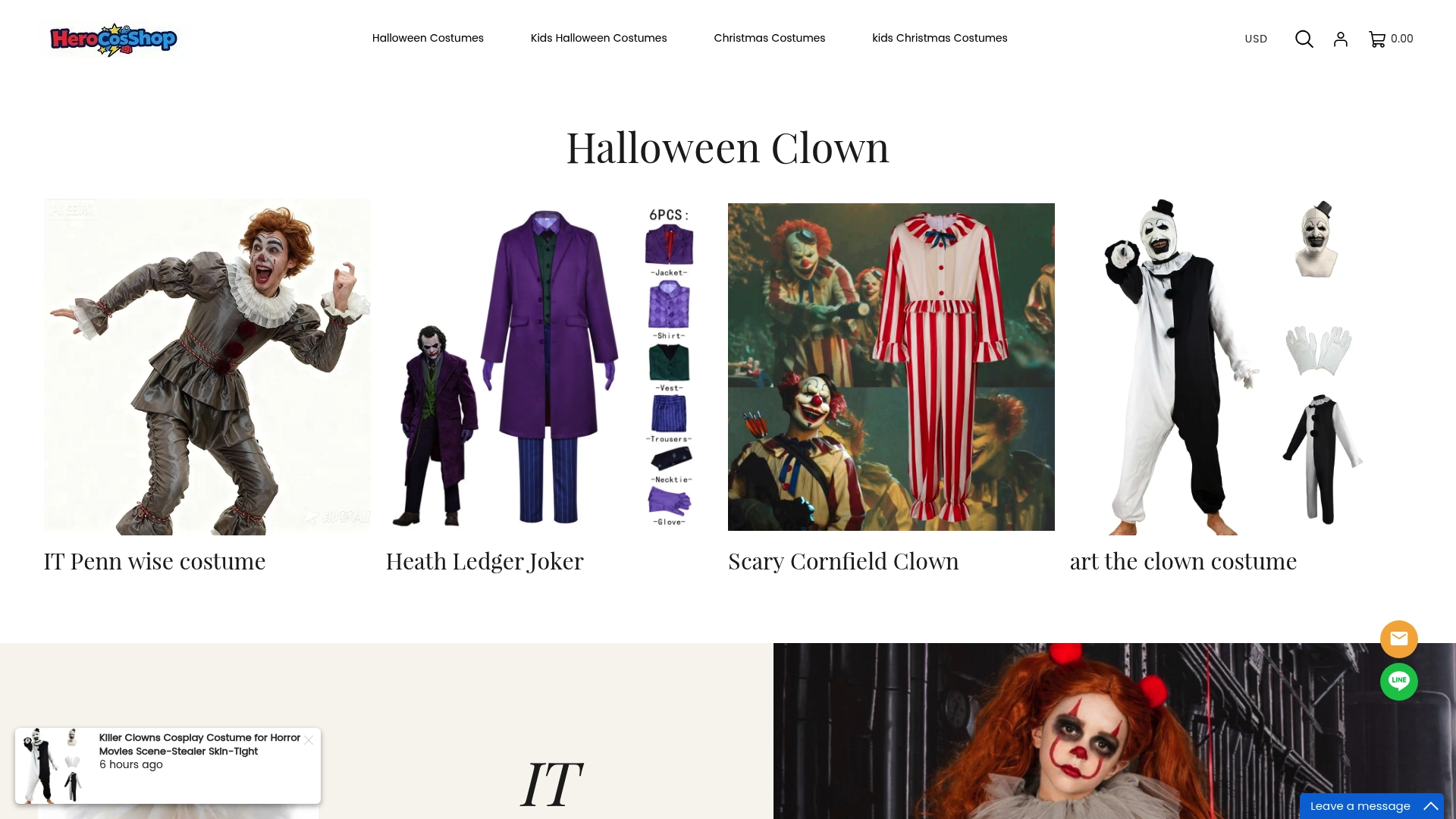
For holiday gatherings, our Christmas costumes collection is organized the same way, so you can compare sizes on each product page with your measurements in hand.
Keep the fit after you wash it
A costume that fit on day one can shrink or stretch after a careless wash. Care depends on the fabric, and the care label comes first. Here is what the sources we checked agree on.
- Cotton: wash in warm or cooler water to prevent shrinkage, according to Twin Cities Geek.
- Nylon and spandex: hand wash or use a delicate cycle with cold or warm water, per the same source.
- Fabric costumes in general: turn the costume inside out, zip it up, remove any padding and wash in cold to lukewarm water with a delicate detergent, as Puzzled Jay Productions describes. Skip the heated dryer.
- Drying: costume fabrics are often not built for dryer heat, which can melt synthetic fibers and shrink natural ones. Columbus Cleaners recommends laying the costume flat or hanging it in a well-ventilated spot out of direct sunlight.
- Delicate fabrics: roll the costume in a color-fast towel to remove water, then lay it flat on a fresh towel, as Dance Teacher magazine explains.
For the full routine, including hand-washing steps and spot cleaning, see our washing costumes guide. Measuring again after a wash is a good habit if the costume looks different.
Common measuring mistakes
A few errors cause most bad fits:
- Measuring over bulky clothing, which inflates every number.
- Letting the tape slope, so the back sits lower than the front.
- Pulling the tape too tight or leaving it loose.
- Using your bra or jeans size in place of actual measurements.
- Skipping the helper and guessing at the numbers you cannot see.
- Ordering for last year's size on a child who has grown.
- Forgetting the layers that go underneath on a cold night.
If you want to double-check your plan, our accessories checklist helps you think about what goes on the body besides the costume itself, and the adult Halloween costume ideas page is a good place to pick a character before you size it. If you are planning for cold weather, see our warm Halloween costumes for ideas that leave room for layers.
FAQ
How do I know what size costume to get?
Measure your chest or bust, waist, hips and height, then compare them to the size chart on that costume's page. Choose the size that fits your largest measurement, and go up if you plan to wear layers or padding underneath.
How do I measure a child for a costume?
Measure height barefoot against a wall, then chest, waist and hips over the layers the costume will go over. Tailor Size Guide suggests sizing up from the chart, since kids move a lot. Check that the hem clears the floor.
Do I measure over clothes or on bare skin?
On bare skin or thin layers for adults, as both Vendetta Couture and Casting Collective advise. For a child who will wear a sweater under the costume, measure over those layers instead, because that is how the costume will be worn.
Where exactly is my natural waist?
It is the narrowest part of your torso, usually where your body creases when you bend to the side. Vendetta Couture places it about 3 to 5 cm above the navel. Tying a string around the area helps you find it.
Sources
- Taking measurements, Vendetta Couture
- Measured approach, Casting Collective
- How to Measure a Child for a Costume, Tailor Size Guide
- Selecting a Pattern Size for Perfect Fit, New Mexico State University
- How to Clean and Maintain Your Cosplay, Twin Cities Geek
- Costume Care, Puzzled Jay Productions
- Halloween Costume Care, Columbus Cleaners
- Brush Up On the ABCs of Costume Care, Dance Teacher
- Between Underwear Sizes? Try the Three Step At Home Test
- How to Measure Yourself and Convert to the Right Size