
The easiest way to nail a group Halloween costume is to pick one recognizable theme and add a single unifying prop or color that every person wears. This guide covers themed idea collections, size-based examples for duos through large crews, last-minute options, DIY and CPSC safety tips, a short planning checklist, and a store route through HeroCosShop for anyone who wants finished pieces instead of a sewing project.
TL;DR:
- Duos need contrasting roles and one bold prop; groups of seven or more should use repeatable themes, such as crayons or cards.
- Costumes built from closet basics need assigned colors and one shared prop; they typically take under an hour when most pieces are already on hand.
- Add reflective trim, favor makeup over masks that limit peripheral vision, and test the full costume for 10 to 15 minutes to catch hazards.
- Set the theme and assign roles six weeks ahead, order pieces and confirm sizes three weeks ahead, then test fit and mobility one week before Halloween.
Table of Contents
- Themed Group Costume Ideas Worth Stealing
- How Many People Are in Your Group?
- Fast Group Costumes From Your Closet Plus One Prop
- DIY Prop Shortcuts and Safety Checks That Matter
- A Simple Planning Checklist for the Whole Group
- Why This Guide Leans Toward Recognizable, Low-Effort Costumes
- Finish Your Group Look With HeroCosShop
- FAQ
- Sources
Themed Group Costume Ideas Worth Stealing
The fastest way to sort through group costume options is to think in three buckets: pop-culture casts, evergreen ensembles, and mundane-object groups that make people laugh. Each works because one glance tells the viewer exactly who everyone is, which is the entire point of a group costume.
Pop-culture casts travel well because people already recognize the characters from posters and trailers. Evergreen groups like the Addams Family or the cast of The Wizard of Oz never go stale and are easy to source secondhand. Mundane-object groups, such as a box of crayons or a bowl of fruit, are often the cheapest and most forgiving for mixed ages and body types.
- TV and film casts: coordinate through character-specific colors or a shared logo, easy to buy ready-made for recognizability.
- Addams Family: black dresses, a bow for Wednesday, and a bald cap for Uncle Fester; DIY-friendly and family-safe.
- Wizard of Oz: ruby shoes, a tin funnel hat, and a stuffed lion mane carry the whole look without much sewing.
- Crayon box: solid-color shirts plus a cone party hat labeled with the crayon name, extremely low-effort and weather-friendly.
- Fruit bowl: felt leaves pinned to colored shirts, works for any age and layers well under a jacket.
- Rock, paper, scissors: three people, three cardboard shapes worn as chest signs, done in twenty minutes.
- Croc shoes and charms: oversized foam Croc cutouts worn as sandwich boards over everyday clothes, a running joke that photographs well in a crowd.
- Where's Waldo crew: one person in the red-and-white stripes, the rest in street clothes acting as the "crowd," a favorite pulled from GoodHousekeeping's group costume roundup.
- Minions: yellow shirts, blue overalls, and goggles, a reliable pick for mixed-age groups and kids' parties.
- Alice in Wonderland cast: one Alice, one Mad Hatter, one Cheshire Cat, and a deck of card guards, flexible for groups of three to eight.
- Horror movie icons: masks or face paint plus a signature weapon prop, best suited to adults-only parties given the intensity.
- Classic clown troupe: ruffled collars, oversized bowties, and bold makeup, a theme that scales from duos to a dozen people and pairs naturally with ready-made pieces from a clown costume collection.
- Superhero squad: team colors and one shared emblem sticker work even when costumes are not identical.
- Decade throwback: pick one decade, assign each person an archetype, and lean on thrifted pieces.
TeenVogue's 2026 list leans hard into current pop-culture moments, while Brit+Co's catalog favors thrift-friendly builds, so cross-reference both when a theme needs backup inspiration.
How Many People Are in Your Group?
Group size changes what works. A duo needs instant contrast, a crowd needs a repeatable formula.
- Two people: pick a pair that only makes sense together, like a lock and key or salt and pepper. Recognizability comes from contrast, not detail, so one bold prop per person is enough.
- Three to four people: a trio or quartet from a well-known cast works best, since four distinct roles still read clearly in a photo. Assign one person as "prop manager" to carry shared items like signs or weapons.
- Five to six people: this is the sweet spot for full ensemble casts, think a classic sitcom friend group or a six-character animated crew. Designate a lead who confirms everyone's piece arrives before the event and a fit checker who confirms sizing a week out.
- Seven or more: go with a theme that allows repeated roles, like a crayon box or a deck of cards, so new additions slot in without a custom costume. Line the group up by height or color gradient for photos so the theme reads instantly instead of looking like a scattered crowd.
For any size, stand the group in a loose line or cluster facing the camera at a slight angle, rather than scattering people randomly, since the unifying prop or color needs to be visible in frame for the joke to land.
Fast Group Costumes From Your Closet Plus One Prop
When there is no time to plan, pick a color palette and one shared prop instead of building full costumes. A group in all black with one red accessory each reads as intentional even with zero other coordination.
- Color-block crew: everyone wears one assigned color from closet basics, no shopping required.
- Single-prop unifiers: matching headbands, sunglasses, or foam signs turn unrelated outfits into a group instantly.
- Thrift or dollar-store swap: grab identical hats or sashes for under an hour of shopping.
- Store-bought accessory kits: coordinating pieces from HeroCosShop's collections fill gaps fast when closets run short.
A look like this typically takes under an hour to assemble and costs very little when it draws mostly from items already on hand.
Pro Tip: Buy one extra of whatever prop ties the group together, since someone always forgets theirs at the last minute.

DIY Prop Shortcuts and Safety Checks That Matter
Cardboard, craft foam, and fabric paint cover most group costume props: cut cardboard into shapes for signs, layer craft foam for lightweight armor or accessories, and use fabric paint for logos instead of iron-on transfers that crack. Reflective tape along hems and a few stick-on LED lights add visibility without changing the look.
The CPSC reports that adults make up a notable share of Halloween-related injuries, with falls and costume-related hazards among the leading causes. That single fact should shape how every group costume gets built.
- Choose tighter-fitting fabrics like polyester or nylon over sheer cotton or rayon, since the CPSC flags the latter as more flammable.
- Add reflective tape or trim to any costume worn after dark, especially for pieces that are mostly dark-colored.
- Favor makeup over masks that block peripheral vision, which matters most in crowded parties or on uneven sidewalks.
- Walk, bend, and climb a few stairs in the full costume for 10 to 15 minutes before the event to catch snag points, overheating risk, or hems that are too long.
A Simple Planning Checklist for the Whole Group
A short timeline keeps a group costume from falling apart the night before.
- Six weeks out: lock the theme and assign roles: an organizer, a costume lead, a prop lead, and a fit checker.
- Three weeks out: order or thrift pieces, confirm sizes, and split the budget evenly or by role.
- One week out: do a trial fitting, test mobility, and fix any length or visibility issues.
- Event day: pack spare props, a safety pin kit, and a group reference photo, then stage the lineup before heading out so everyone knows where to stand for photos.
Why This Guide Leans Toward Recognizable, Low-Effort Costumes
Group costumes fail most often when every person tries to be perfectly accurate instead of instantly readable, so this guide favors one strong signal per person over five subtle details nobody notices in a photo. Comfort and local safety rules should always override a theme, and every idea here is meant to be adjusted, not followed exactly.
— zz
Finish Your Group Look With HeroCosShop
We offer ready-made pieces for many popular themes, from full character sets to single accessories, so your crew can skip the sewing machine entirely. 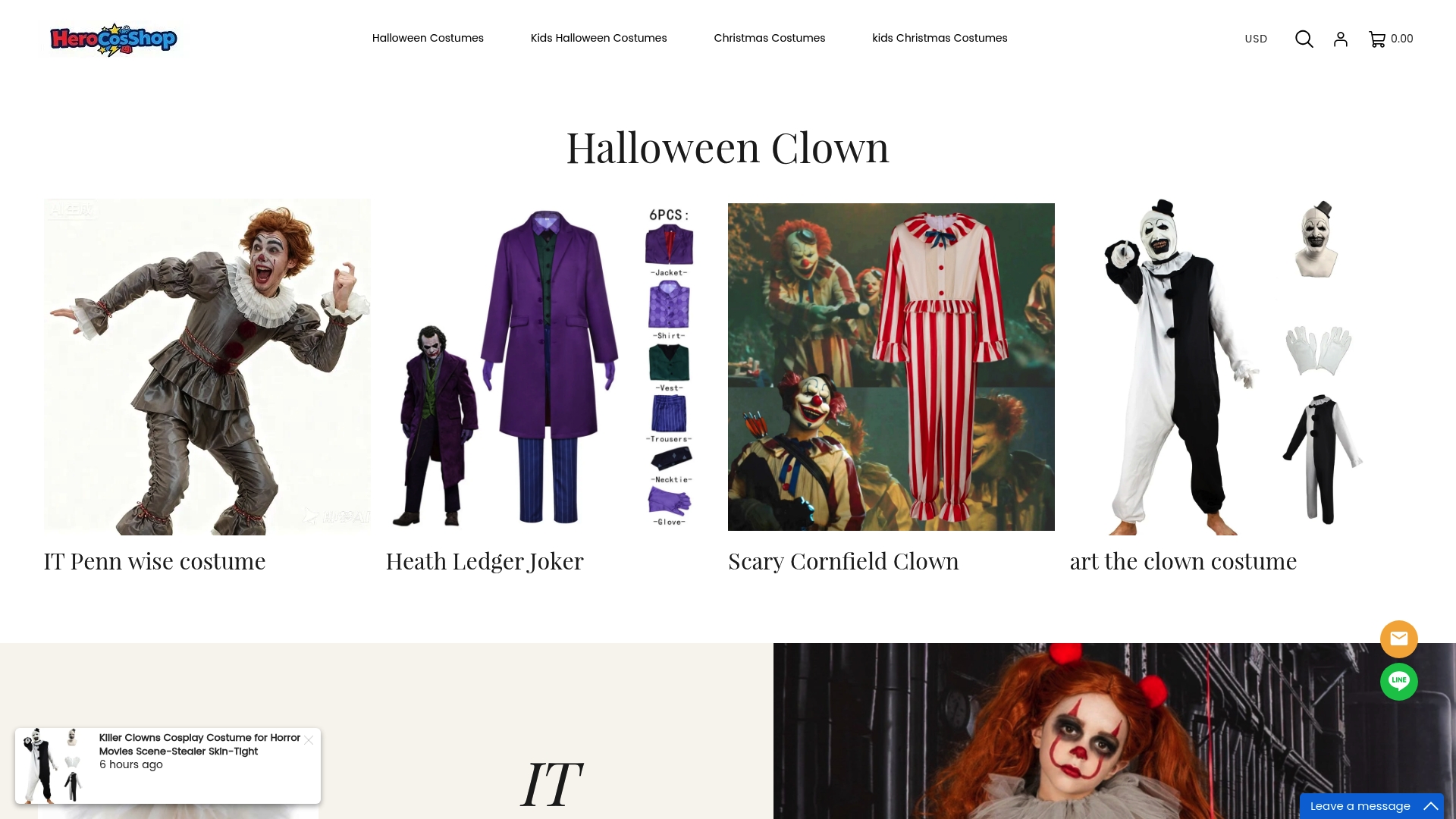 Browse coordinating accessories and full costumes by theme, check the size chart before ordering for a group, and order early since group orders take longer to arrive together. A clown or horror theme pairs well with pieces from our clown costume collection, while family groups can start with our kids costume selection. Start browsing to lock in your group's look before sizes run out.

FAQ
What to dress up as a group for Halloween?
Pick a theme everyone already recognizes, like a well-known film cast, an evergreen ensemble such as the Addams Family, or a mundane-object group like a crayon box. The strongest choices give each person one clear signal, whether that is a color, a prop, or a signature piece.
What are some good group Halloween costumes for 2026?
Pop-culture casts tied to current shows and movies tend to dominate yearly lists, alongside reliable evergreen picks like Alice in Wonderland or a superhero squad. TeenVogue's 2026 roundup focuses heavily on current pop-culture moments paired with closet-friendly DIY builds.
What can 5 people be for Halloween?
Five people fit well into full ensemble casts like a classic sitcom friend group, an Alice in Wonderland cast, or a five-color crayon box. Assign one person as the lead to confirm every piece arrives and one as fit checker to catch sizing issues early.
What are some good group theme dress up ideas?
Mundane-object themes such as a fruit bowl or a deck of cards work for nearly any age range, while pop-culture casts and classic ensembles like the Wizard of Oz give instant recognizability. Brit+Co's catalog collects a wide range of these ideas with thrift-friendly builds for larger groups.
How do I keep a group costume safe for trick-or-treating or parties?
Choose tighter-fitting fabrics like polyester over sheer materials, add reflective trim for visibility, and favor makeup over masks that limit peripheral vision, following CPSC safety guidance. Testing mobility in the full costume beforehand catches trip hazards and overheating risks before the event.
Sources
- Cpsc
- 86 Group Halloween Costumes For Families and Friends | GoodHousekeeping
- 15 Best Group Halloween Costume Ideas for 2026 | TeenVogue
- 80 Group Halloween Costume Ideas For The Most Iconic Season - Brit + Co